




Choosing a pergola in the UAE is not the same decision as choosing one in a mild European garden. Dubai, Abu Dhabi, and the wider Gulf subject outdoor structures to a uniquely punishing combination of heat, humidity, salt, and dust. The material you select determines how often you will need to repair, repaint, or replace it, and how usable your terrace actually is between May and September. This guide compares the three most common pergola materials—aluminium, wood, and steel—specifically against Gulf conditions.
What the Dubai climate actually does to outdoor structures
Before comparing materials, it helps to be honest about the environment they must endure:
- Extreme heat. Summer surface temperatures on exposed metal and timber can rise far above the air temperature. Anything you touch, sit under, or walk near becomes hot.
- Intense UV. The Gulf sun degrades finishes, fades stains, and breaks down low-grade coatings faster than most northern climates.
- Coastal salt and humidity. In areas like the Palm, Dubai Marina, JBR, Yas Island, and most of Abu Dhabi's waterfront, salt-laden air accelerates corrosion on unprotected metals.
- Dust and sand. Fine dust infiltrates hardware, hinges, and crevices. Smooth, sealed surfaces are much easier to keep clean.
- Short but heavy rain and wind events. Occasional winter storms and shamal winds test how well a structure is anchored and sealed.
A material that performs beautifully in a temperate climate can underperform badly here. That is why the right choice for the UAE is often different from generic international advice.
Wood pergolas: warm look, high maintenance
Timber pergolas are attractive and feel natural, which is why many villa owners are initially drawn to them. The problem in the Gulf is maintenance and longevity.
Strengths
- Warm, organic appearance that suits garden and landscaped settings.
- Lower upfront cost for basic designs.
Weaknesses in the UAE
- Sun and heat dry it out. Intense UV and heat cause cracking, splitting, and warping over time.
- Frequent refinishing. Stains and sealants must be reapplied regularly to prevent timber from greying and deteriorating, which involves ongoing labor and cost.
- Moisture and pests. Humidity near the coast combined with irrigation spray promotes rot, and termites are a genuine concern in the region.
- No moving roof. A fixed timber frame provides shade but offers no control over sun, ventilation, or rain.
Wood can work for a shaded garden feature where the owner accepts a maintenance routine. For a primary, daily-use terrace cover that needs to last with minimal fuss, it is usually the weakest fit for Gulf conditions.
Steel pergolas: strong but vulnerable to corrosion
Steel is structurally strong and can span large areas, which makes it tempting for big terraces. The issue is what the coastal climate does to it.
Strengths
- High structural strength and rigidity.
- Can be engineered for large or unusual spans.
Weaknesses in the UAE
- Corrosion risk. Near the coast, salt air attacks steel. Galvanising and quality powder coating help, but any scratch, drilled hole or weld point becomes a potential rust entry point.
- Heat retention. Steel absorbs and holds heat, so exposed sections get very hot in summer.
- Weight. Heavier structures can complicate installation and fixing, especially on existing terraces and rooftops.
- Maintenance vigilance. Coatings must be inspected and touched up, or corrosion can spread unseen.
Steel is viable inland and away from salt spray when properly treated, but on a coastal villa or waterfront apartment it demands ongoing care to stay looking good.
Aluminium pergolas: built for the Gulf
For most UAE homes and businesses, aluminium is the material that solves the climate problem rather than fighting it.
Why aluminium suits Dubai and Abu Dhabi
- Corrosion resistance. Aluminium does not rust like steel. With a quality powder-coated finish it stands up well to coastal salt air, making it ideal for the Palm, Marina, Saadiyat and other waterfront areas.
- Lightweight strength. It is strong enough for large spans yet light enough to install cleanly on terraces, rooftops and around pools.
- Low maintenance. No sealing, no staining, no annual refinishing. An occasional rinse to clear dust is usually all it needs, which matters in a dusty environment.
- UV-stable finishes. Good powder coatings hold their colour under harsh Gulf sun far better than timber stains.
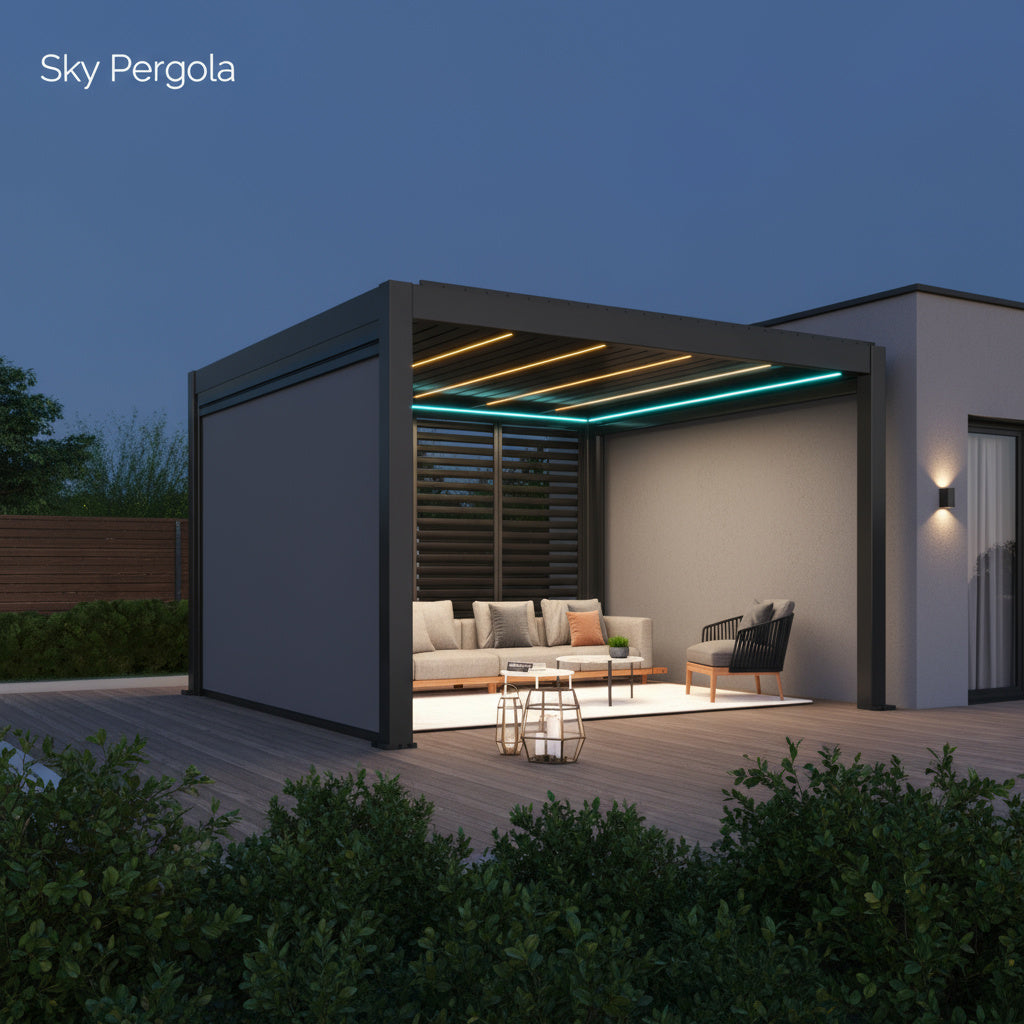
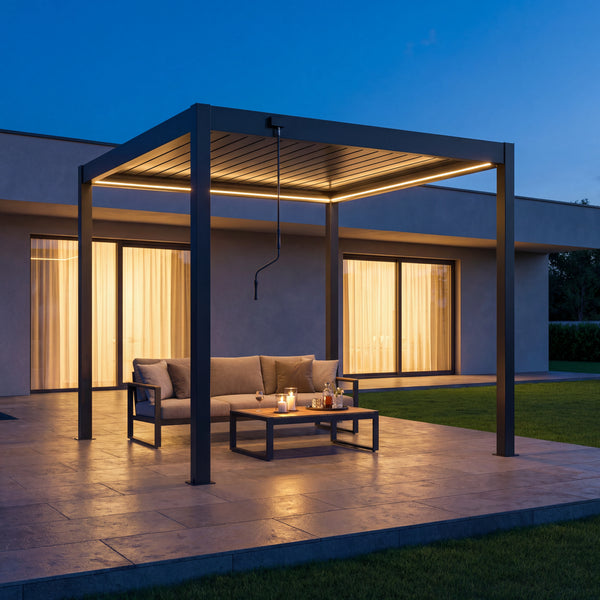
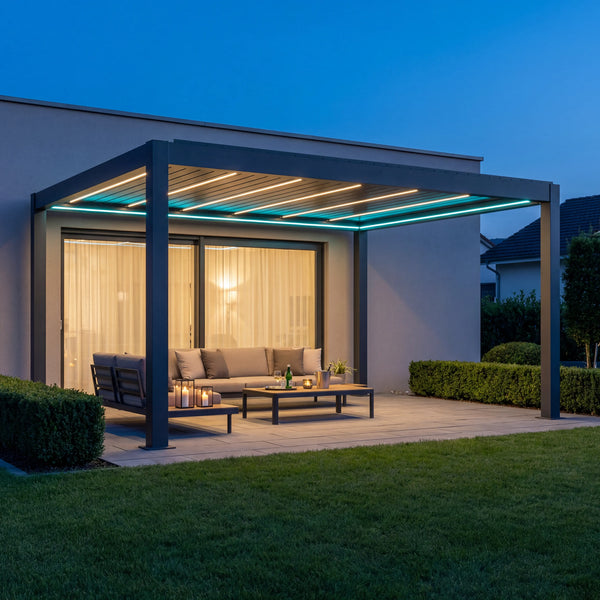
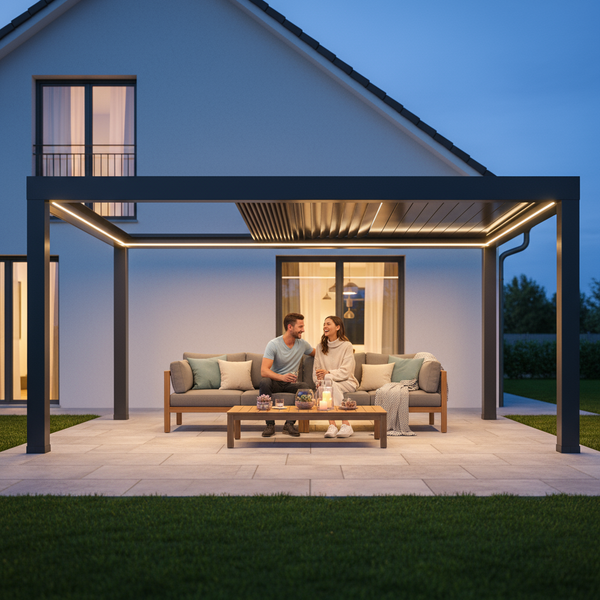
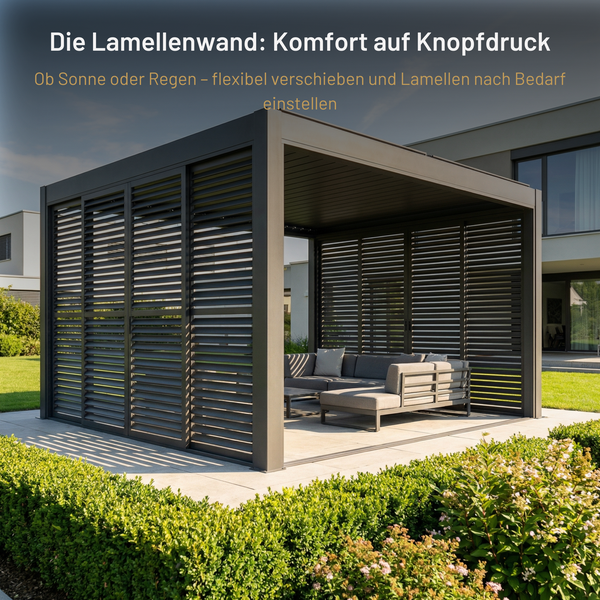
- Adjustable louvre roofs. This is the decisive advantage. A motorised louvre (bioclimatic) roof lets you angle the blades for shade and ventilation during the day, then close them fully against sun or sudden rain. You control the microclimate instead of just sitting under a fixed cover.
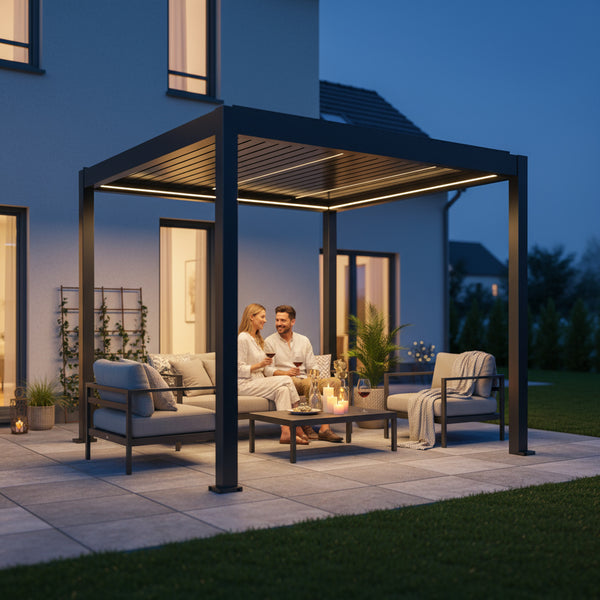
That last point is why aluminium louvre roof pergolas have become the default choice for serious outdoor living in the region. A bioclimatic pergola that opens, closes and ventilates turns a terrace that is unusable at midday into a comfortable space for far more of the year.
Quick comparison for UAE conditions
| Factor | Aluminium | Wood | Steel |
|---|---|---|---|
| Corrosion / salt-air resistance | Excellent | N/A (rot/termite risk) | Poor without constant care |
| UV and heat durability | High | Low (cracks, fades) | Moderate (gets very hot) |
| Maintenance effort | Very low | High | Moderate to high |
| Adjustable louvre roof option | Yes | No | Rarely |
| Best fit | Coastal and inland UAE homes | Shaded garden features | Inland, away from salt |
What to look for beyond the material
Even with aluminium, quality varies. When you compare options, check these details:
- Coating quality. Ask about the powder-coat specification and whether it is suited to marine and coastal environments.
- Wall thickness and engineering. Thin extrusions flex and rattle in wind. Proper structural design matters for shamal events.
- Drainage. Integrated gutters and downpipes in the frame keep rainwater managed during winter storms.
- Hardware and motors. Sealed, corrosion-resistant fixings and reliable motorisation determine how the roof performs years from now.
- Professional installation. Correct anchoring and waterproofing at the fixing points protect both the pergola and your building. See our notes on pergola installation in Dubai.
The bottom line for UAE homeowners
For the Dubai and wider Gulf climate, aluminium is generally the strongest all-round choice. Wood looks lovely but asks for constant upkeep and struggles with heat, humidity and termites. Steel is strong but fights a losing battle against coastal corrosion unless it is carefully maintained. Aluminium resists salt and UV, stays cool relative to steel, needs minimal maintenance, and uniquely supports adjustable louvre roofs that let you manage sun, shade and rain on demand.
If you are weighing up a structure for a villa terrace, rooftop or poolside, an aluminium pergola in Dubai will almost always give you the most usable outdoor space for the least ongoing hassle.
Not sure which configuration suits your space, orientation and budget? Our team knows UAE conditions and can advise on the right specification for your home. Book a free, no-obligation consultation and we will help you plan a pergola built to last in the Gulf climate.


